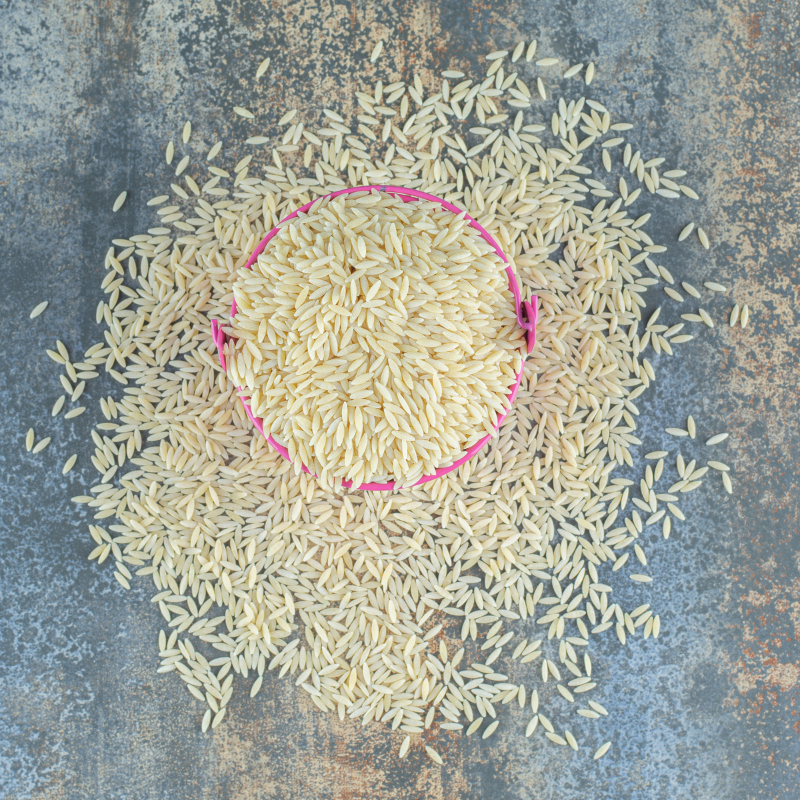

Basmati rice is a long-grain aromatic rice variety primarily grown in the Indian subcontinent, especially in the foothills of the Himalayas in India and Pakistan. The name “Basmati” comes from the Sanskrit word “Vasmati,” meaning “fragrant,” reflecting its signature aroma and delicate flavor.
Known for its slender, long grains that elongate even more when cooked, Basmati rice is prized for its non-sticky, fluffy texture. It is a staple in North Indian, Persian, and Middle Eastern cuisines, often used in biryanis, pulaos, pilafs, and festive dishes. The aged varieties of Basmati are particularly valued, as aging enhances their aroma and cooking quality.
Nutritionally, Basmati rice is rich in carbohydrates and provides small amounts of protein. It typically has a lower glycemic index than most other rice varieties, especially the brown or whole-grain versions, making it a better choice for blood sugar control when consumed in moderation.
Basmati rice is available in white (polished) and brown (whole grain) forms. While white Basmati is more common and quicker to cook, brown Basmati retains more fiber and nutrients. Its unique aroma, flavor, and elegant appearance make Basmati rice a preferred choice for special meals and culinary presentations worldwide.