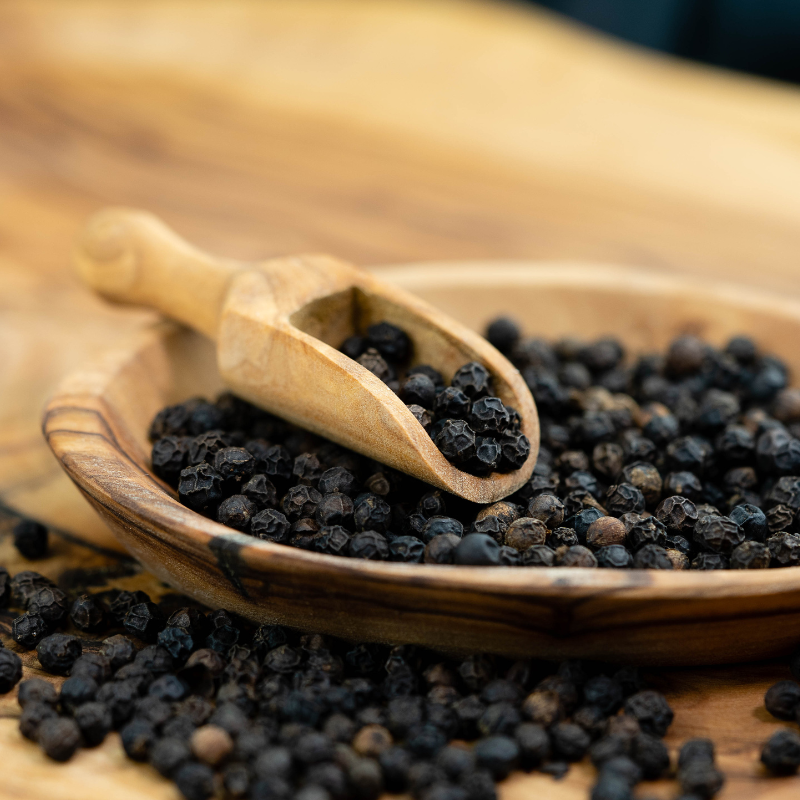

Black pepper, often referred to as the “King of Spices,” is one of the most widely used and traded spices in the world. It is obtained from the dried berries of the Piper nigrum plant, native to the Western Ghats of India, particularly Kerala. Black pepper has a sharp, pungent flavor and a warming spice profile, making it an essential ingredient in both culinary and medicinal applications.
In cooking, black pepper is used whole, crushed, or ground to season a wide variety of dishes—from soups and curries to salads and marinades. It enhances the flavor of other spices and is a staple in spice blends like garam masala and rasam powder.
Black pepper is also known for its impressive health benefits. It contains piperine, a compound that improves digestion, boosts metabolism, and enhances the absorption of nutrients, especially curcumin from turmeric. It also has antioxidant, anti-inflammatory, and antibacterial properties.
In traditional medicine, black pepper is used to treat cold, cough, indigestion, and respiratory ailments. It is often included in herbal teas and home remedies.
Thanks to its rich flavor and medicinal qualities, black pepper holds an important place in kitchens and healing traditions around the world.