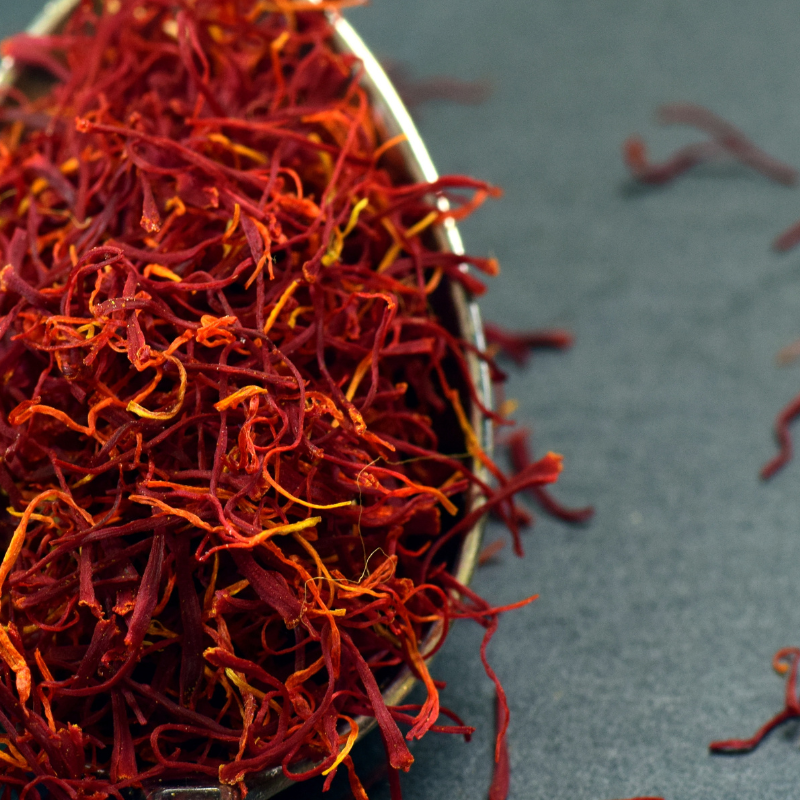

Saffron, known as “Kesar” in Hindi and “Kungumapoo” in Tamil, is one of the world’s most precious and expensive spices. It is derived from the stigmas of the Crocus sativus flower, which are hand-harvested and carefully dried. It takes around 75,000 flowers to produce just one pound of saffron, making it a highly valued spice, both in culinary and medicinal uses.
Saffron is known for its vibrant golden-yellow color, distinct floral aroma, and slightly sweet, earthy flavor. In Indian cuisine, it is used in luxurious dishes such as biryanis, kheer, halwa, and kulfi. It is also added to milk (kesar doodh) and festive sweets to enhance flavor, color, and aroma. Just a few strands are enough to transform a dish.
Rich in antioxidants, especially crocin, safranal, and picrocrocin, saffron is believed to support mood regulation, memory enhancement, and cell protection. In Ayurveda and Unani medicine, saffron is used to treat depression, skin issues, and respiratory conditions, and is also considered an aphrodisiac.
Saffron must be stored in a cool, dark place to preserve its potency. Despite its high cost, saffron remains a symbol of luxury, health, and celebration in many cultures, especially in Indian traditions.