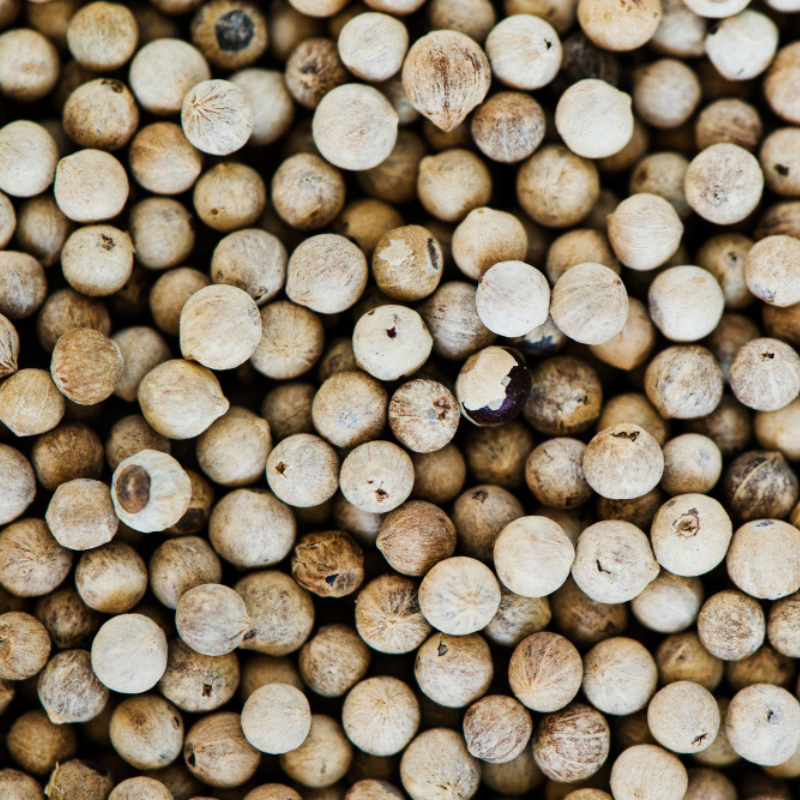

White pepper is a popular spice derived from the ripe seeds of the Piper nigrum plant, the same plant that produces black pepper. The key difference lies in the processing: white pepper is made by removing the outer skin of the peppercorn, leaving only the inner seed, which gives it a milder, less pungent flavor compared to black pepper. It is commonly used in cuisines where a more subtle peppery taste is preferred without the dark specks of black pepper.
White pepper is extensively used in Chinese, Southeast Asian, and European cooking, especially in light-colored dishes such as white sauces, soups, mashed potatoes, and seafood recipes, where black pepper’s appearance might be visually distracting. Its flavor is slightly earthy, sharp, and more delicate than black pepper, adding warmth without overwhelming other ingredients.
Nutritionally, white pepper contains compounds that aid digestion, improve circulation, and possess antioxidant and anti-inflammatory properties. It can stimulate the secretion of digestive enzymes, helping break down food more efficiently.
Due to its milder taste, white pepper is preferred in recipes requiring a gentle pepper flavor. It is a versatile spice that adds depth to dishes while blending seamlessly into lighter-colored foods, making it a subtle but essential ingredient in many kitchens worldwide.